Back in 2015, early in my IT days, I listened to a podcast about software-defined radios (SDRs). Intrigued, I purchased a Nooelec NESDR Mini 2 off Amazon for about $20. I connected it to a Raspberry Pi and spent a weekend playing with it, but had loads of trouble getting it to work with anything. Linux packages, compatibility issues, the usual stuff. Eventually, the SDR got shelved.
(I’d also like to think that modern-day me could have gotten much further, but modern me also has far less free time.)
Recently, I listened to an episode of How I AI featuring Felix Rieseberg from Anthropic. He was showing off a little hardware device he’d built with Claude Code, explaining that you could essentially connect a programmable device to your computer and let AI figure out how to program it.
“You can just straight up connect this to your computer. […] And then all I did was I told Claude Code, here’s my vision.”
That reminded me of my old SDR dongle, and I thought it was worth another try.
Setting up the Raspberry Pi ADS-B receiver
The setup was straightforward. I reimaged a spare Raspberry Pi and gave Codex the username and password. This was a fresh, single-purpose Pi that I didn’t mind AI having full access to. (I’ve written about how I give agents instructions for homelab projects in How I Use AGENTS.md for AI-Assisted Homelab Projects.) Newer agents seem to be getting a little more reluctant to handle passwords directly, so setting up SSH keys ahead of time might be the better option.
Next, I plugged in the SDR.
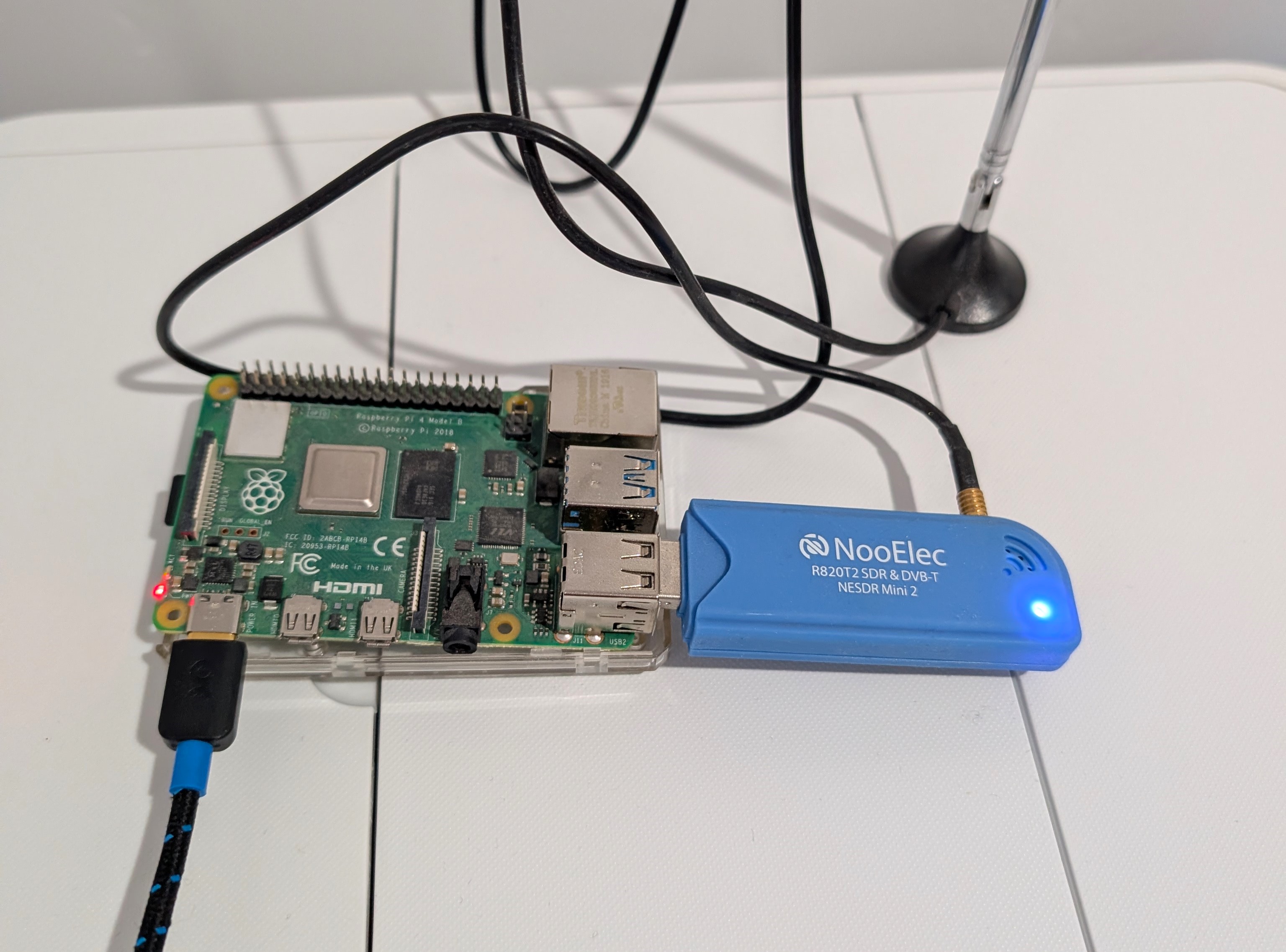
My goal was to use it as an ADS-B receiver. ADS-B (Automatic Dependent Surveillance Broadcast) is a system where aircraft broadcast their position, altitude, and other flight information over radio. With an inexpensive SDR, you can pick up those signals and track nearby aircraft.
I live near the approach paths for a couple of airports, so being able to see exactly what’s flying overhead sounded pretty cool.
Then Codex was off to the races.
I used GPT-6 Luna at high effort for this project. What’s kind of crazy to me was not just that it was able to complete the project, but how fast it was.
It took just under two hours (and some of that was just waiting for packages to install on the Pi), and used less than 20% of my five-hour usage limit on a $20 ChatGPT plan.
I mean, it could have had the decency to at least make this project look as hard as I remembered it being.
It did run into what I assume was a similar problem to the one that stopped me a decade ago. The Debian-packaged version of readsb, the software used to decode ADS-B signals, didn’t include support for the RTL-SDR dongle. The service kept crashing.
Rather than getting stuck there, Codex built the upstream version of readsb with RTL-SDR support and sorted out the USB permissions issues.
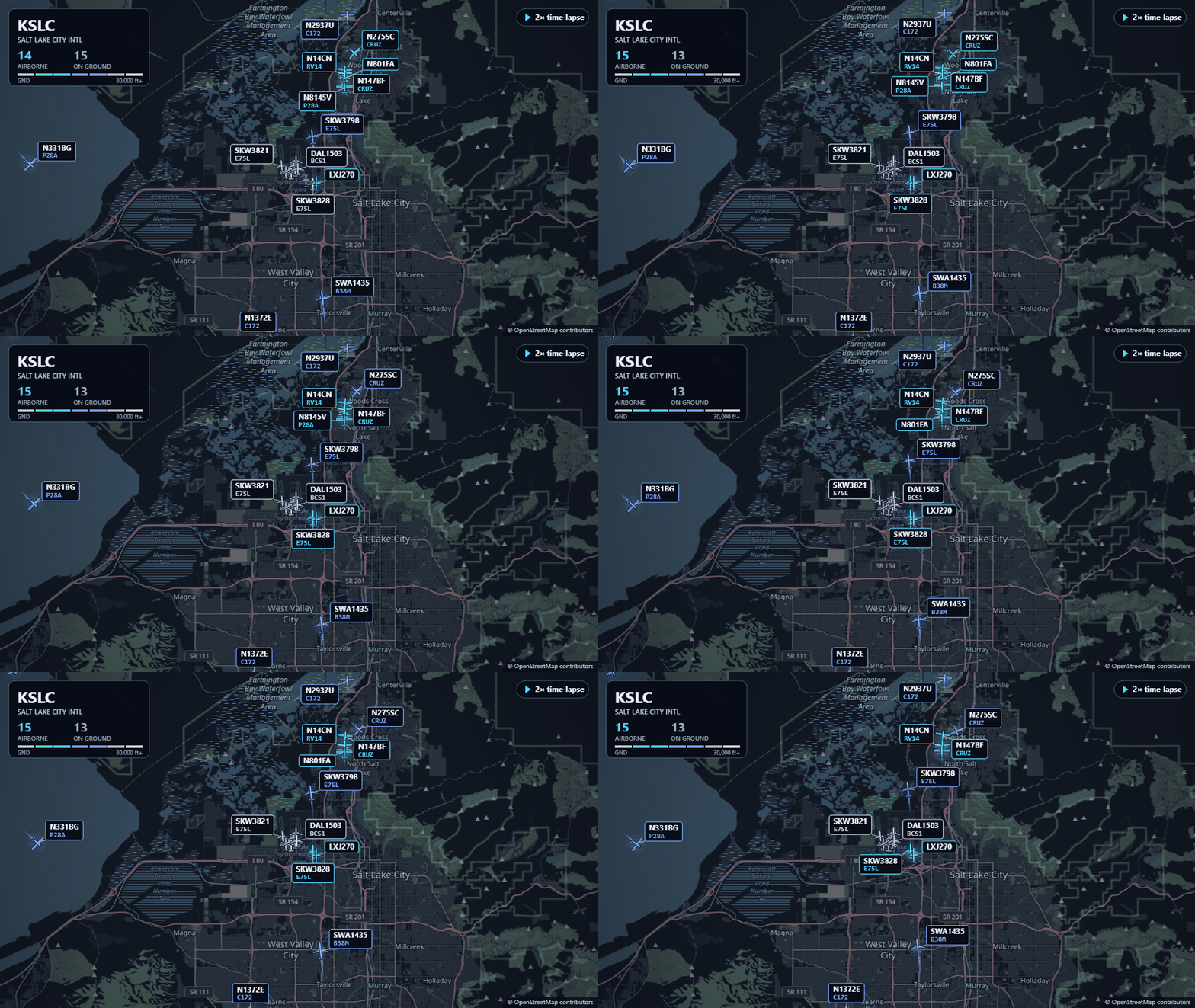
It even built a custom frontend to show local air traffic (that’s the time-lapse map at the top of this post), although ultimately I opted to have it set up tar1090, an existing open-source aircraft tracking map. I also integrated the data into my existing homelab dashboard.
What’s next
The lesson on AI’s hardware capabilities is pretty clear, and I’m definitely going to have to find some more projects for it to tackle. Technically, most of the work here was software configuration and troubleshooting rather than programming the hardware itself, but that was exactly the part I couldn’t get working before.
I also asked Codex what else I could do with the SDR. There are plenty of possibilities, but since it’s a single tuner, I’m going to leave it dedicated to ADS-B for now. (I did pause ADS-B for one evening to catch the Salt Lake weather balloon and tracked it up to about 15 km.) However, it identified several other types of signals the SDR could potentially receive:
- FM radio
- Weather balloon signals
- Utility meter signals
One thing I’d still like to do is feed the aircraft data to FlightAware and/or Flightradar24. Both offer complimentary premium-level accounts in exchange for contributing flight tracking data.
Now I’ve got to figure out what else I can connect to a coding agent and have it set up for me.
Have you used an AI coding agent to get an old hardware project working? I’d be interested to hear about it in the comments.